Snake River sockeye salmon: the 900-mile run to Redfish Lake
No salmon in the United States travels farther inland or climbs higher to spawn. In the early 1990s, the Snake River sockeye came within a few fish of disappearing.
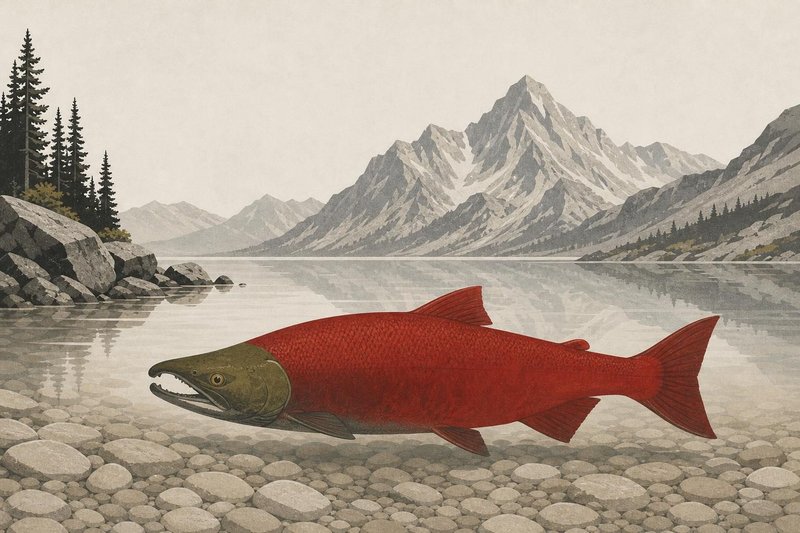
Snake River sockeye salmon (Oncorhynchus nerka) spawn in the lakes of Idaho's Sawtooth Valley, about 900 river miles from the Pacific and roughly 6,500 feet above sea level. To get there, adults pass eight federal dams on the Columbia and Snake rivers, then climb the Salmon River into the mountains. It is one of the longest and highest salmon migrations on Earth, and for the Snake River sockeye it nearly ended.
A lake-dwelling salmon
Unlike most salmon, sockeye need a lake. Females dig their Redd The gravel nest a female salmon digs to lay her eggs. Glossary in gravel along lake shores or in inlet streams in the fall. The young spend one to two years in the lake feeding on plankton before turning into Smolt A young salmon turning silver and ready to migrate to the sea. Glossary and heading downriver in spring. Most spend two years at sea before returning.
On the way home they change dramatically. Silvery-blue ocean fish turn deep red with an olive-green head; males grow a hooked jaw, the Kype The hooked jaw male salmon develop before spawning. Glossary, and a humped back. Sockeye die after spawning, and their bodies return ocean nutrients to the lakes. Redfish Lake takes its name from the color of the spawning runs that once filled it. The lake also holds Kokanee Sockeye salmon that spend their whole life in a lake. Glossary, sockeye that never go to sea.
Near extinction in the 1990s
Snake River sockeye were listed as Threatened and endangered Protection levels under the Endangered Species Act. Glossary in 1991. The counting window at Lower Granite Dam recorded no sockeye at all in 1990, and fewer than 20 a year through most of the decade. In 1992 a single male, nicknamed Lonesome Larry, made it back to Redfish Lake.
To keep the run from disappearing, the Idaho Department of Fish and Game and NOAA Fisheries began a captive broodstock program in 1991, spawning the last returning adults and raising their offspring in hatcheries. Released fish slowly rebuilt the run. Returns climbed into the hundreds after 2000 and into the thousands in some later years, with a record 2,947 sockeye counted at Lower Granite in 2024.
Source: Columbia River DART, adult passage counts at Lower Granite Dam, 2025.
Why the run is still fragile
Most returning sockeye today come from the hatchery program, and the number of naturally produced fish remains small. Warm water is a particular threat: sockeye migrate in mid-summer, when the lower Columbia and Snake can heat up, and in 2015 a heat wave killed most of that year's run before it reached Idaho. Biologists also point to the long distance and the eight dams between the lakes and the sea, which together cost a large share of each year's migrants.
This season's count, compared with every year since 1975, is on the fish counts page; the debate over what would most help the run is set out in the dam removal FAQ.
Questions about Snake River sockeye
Why are Snake River sockeye red?
Sockeye are silvery blue at sea. As they return to fresh water and stop feeding, they turn bright red with an olive-green head, and males develop a hooked jaw and a humped back. The color is a sign that they are close to spawning.
Where do Snake River sockeye spawn?
In a handful of lakes in the Sawtooth Valley of central Idaho, most of all Redfish Lake near Stanley. Juveniles rear in the lakes for one to two years before migrating to the sea.
Who was Lonesome Larry?
Lonesome Larry was the only sockeye to return to Redfish Lake in 1992, the year after the run was listed as endangered. He was spawned in the captive broodstock program, and his genes are part of the run that exists today.
Can I fish for Snake River sockeye?
Snake River sockeye are listed as endangered, and fisheries targeting them in Idaho are closed in most years. Anglers should check the current Idaho Department of Fish and Game rules before fishing for any salmon.